The most expensive bug is the one your customer finds.
Reliable tests on your own hardware, at every commit, without depending on a hand-built bench or on one person.
Not ready yet? Join the waitlist and follow the progress.
In service on two Crispy hardware-CI benchesYour pipeline stays in chargeIn your lab or hosted by Nought
How a hardware-in-the-loop run works
One run, from lease to clean state. Select a step to follow what changes on the bench.
bench clean, ready for a run
-
Your pipeline requests a bench
nought: lease acquired by ci runner
-
Diskless boot.
booting from ram, no disk attached
-
Full power cycle.
dut: power cycle, rail A off → on, cold start
-
Verified reference image.
provision: reference image written, readback verified
-
Run your tests over SSH.
ssh: test session open, serial and signals captured
-
The result returns to your pipeline
verdict: PASS, returned to ci runner
-
Erase. Power off. Ready again.
swd: target erased, power off
Test it against your bench: become a design partner Reserve a bench from the first batch
Keep your tools. Let the bench run itself.
- Works with your existing CI
- Use GitHub, GitLab, Jenkins or your own tooling to reserve a bench, run tests and collect results. Your pipeline stays in charge.
- First green in days, not months
- If your test scripts already exist: wire your target, point your CI at the lease API, run.
- No framework, no Kubernetes
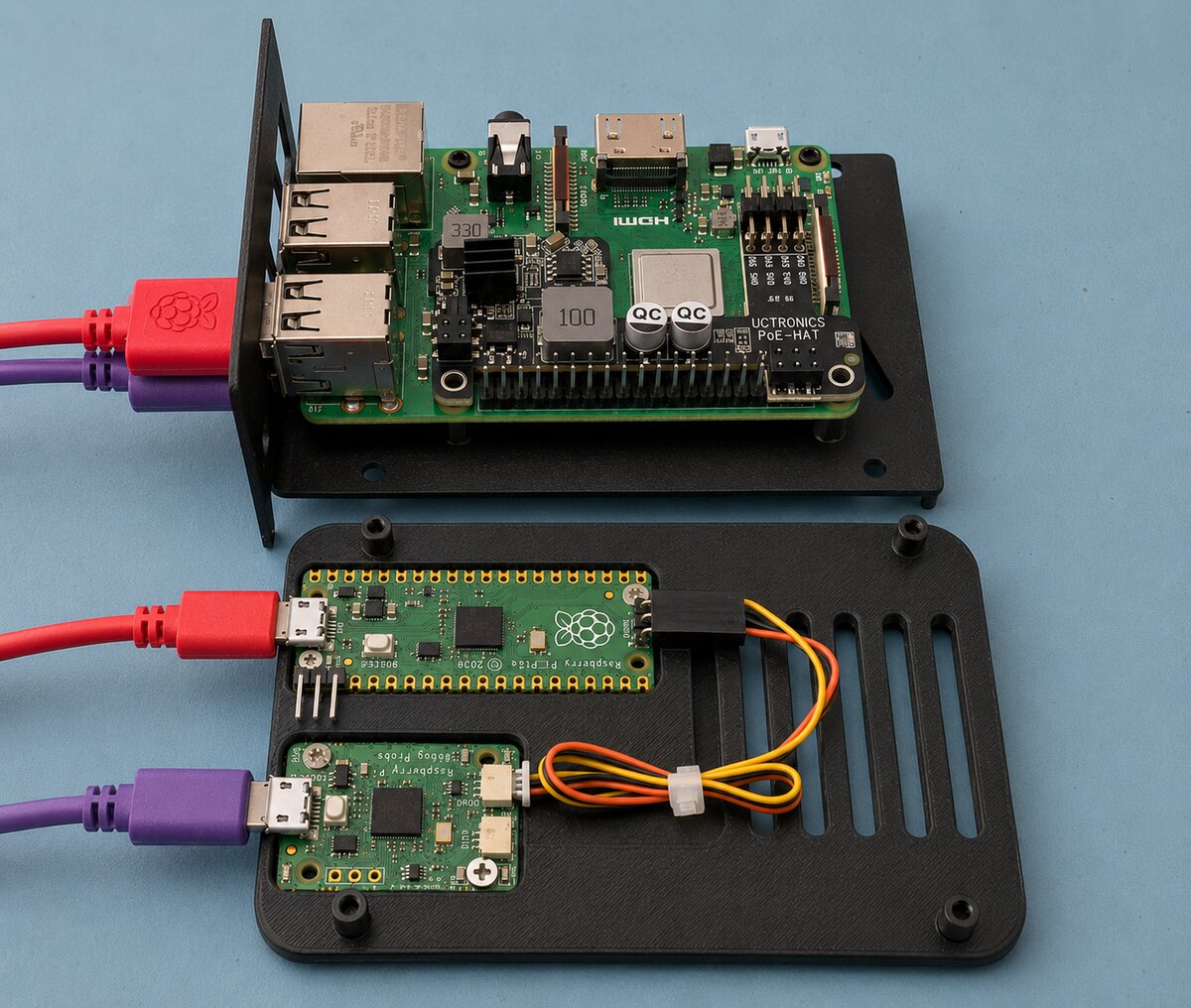
- Standard Raspberry Pi plus off-the-shelf probes. No proprietary boards.
Release with confidence, not a hope that the bench was right.
A green check matters only when it supports a release decision. Nought starts each run from a known state, so your team can reproduce failures and release with confidence, not guesswork.
Catch defects before customers do
A test you cannot trust becomes a field failure. Real-hardware tests find it before release, where it is cheaper to fix.
The Milbank Quarterly, FDA dataYour bench should not depend on one person
Replace one person’s setup and know-how with a workflow the whole team can run the same way.
A green check you can trust
A passing result reflects your firmware and tests, not whatever state the bench was in that day.
In service on Crispy.
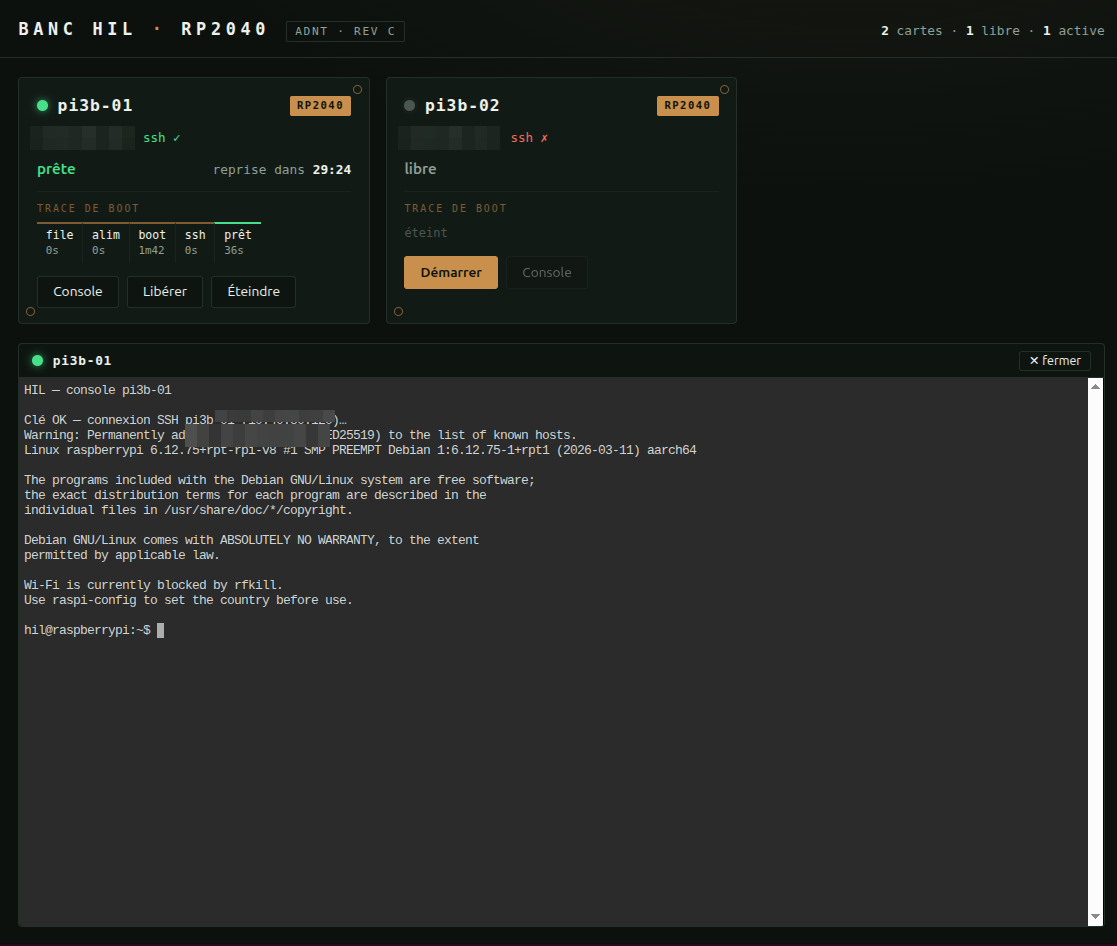
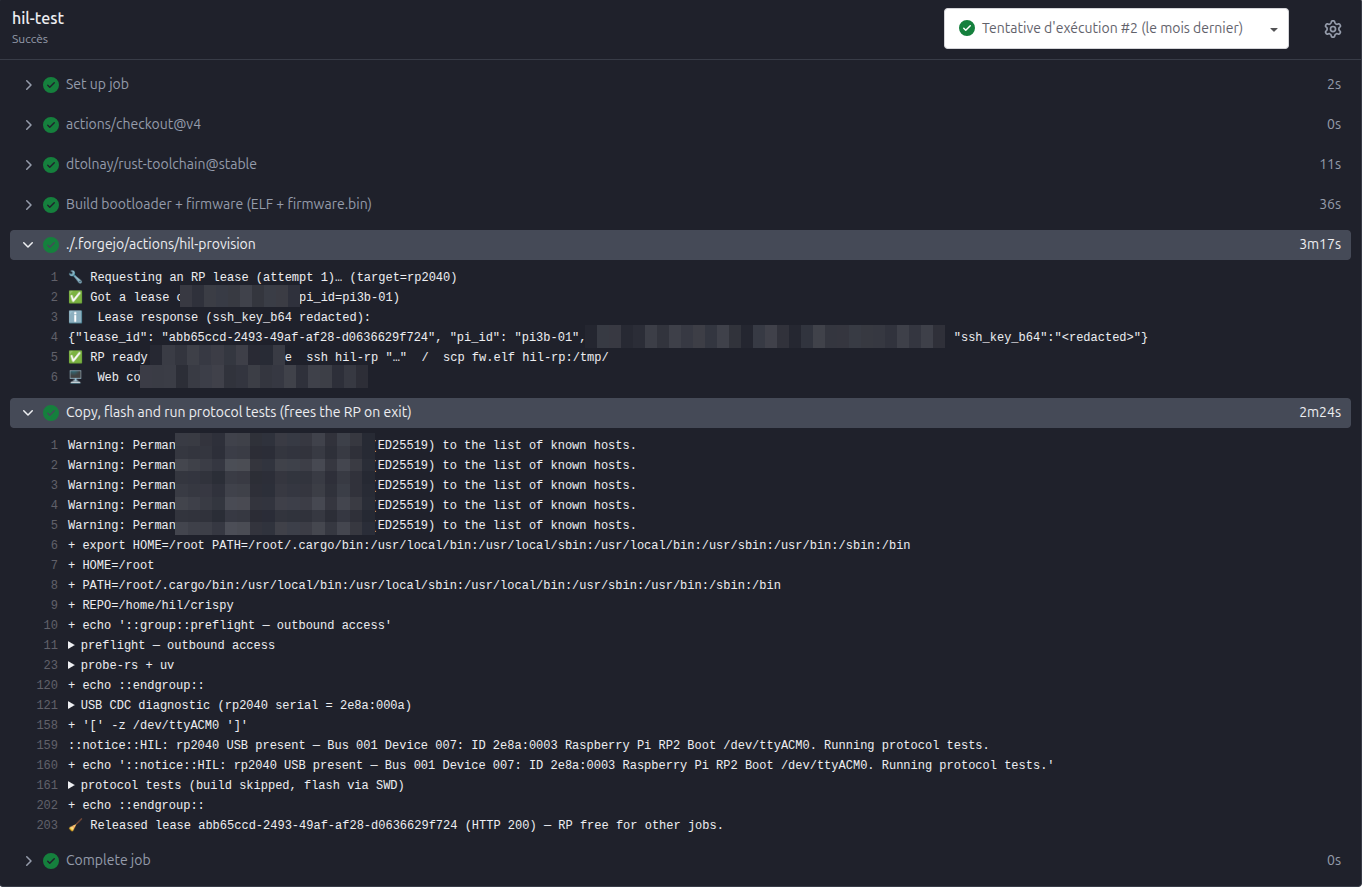
Two benches run the hardware CI of Crispy, our open-source A/B bootloader: boards, pipeline and control portal.
On the roadmap: a signed record of every run for audit evidence. See what it will contain.
Does this look like your bench?
Show us your target and your CI. We are validating Nought with a small number of embedded teams.
Built because we needed it.
After 20+ years across IT, software and firmware, I kept seeing the same gap: software is automated; real-hardware tests remain bespoke and manual.
At ADNT, Crispy made it concrete. We built the bench our CI needed: one it can reserve, boot clean and reset after every run. Nought is the bench I kept wishing I had.
Three ways to get involved.
Shape Nought with us, reserve a place in the first batch, or follow its progress.
We built it for our bench. Now we want to test it against yours.
Help us validate Nought against your board and workflow.
- Sep 2026 launch gathering, 2 months, consolidation
- Dec 2026 roadmap published early-access influence
- Jan 2027 development starts development
- for early-access users first batch
early-access sign-ups open until the end of 2026
Early access
CHF 1 000
One-time deposit, deducted from your first bench
100% refundable
- Get priority access to the first hardware batch.
- Your CHF 1 000 are deducted from the price of your first bench.
- Help shape the roadmap.
- No budget risk: the deposit is fully refunded if Nought never ships.
Waitlist
Interested, keep me posted.
Every run leaves a record.
On the roadmap: a signed record linking firmware, device, tests and verdict. Audit evidence, not a screenshot.
Roadmap item. No run is signed today.
Questions
Compared with other tools
Why not Jumpstarter or labgrid?
They solve remote access to hardware, and they do it well. What they don't do is make the test host itself disposable. Nought does. Think of it as an extension of your CI, not a replacement for your tools.
How is it different from Lager or BenchCI?
They wrap your bench and ship your tests to it. Nought does one thing: it makes the test host itself ephemeral, so reproducibility comes from the machine, not from how carefully someone wrote the teardown script. Run it next to them, or on its own.
Getting started
How long until my first green pipeline?
If your test scripts already exist: a few days. Wire your target, point your CI at the lease API, run. No lab to build, no Kubernetes, no IT project. Framework-based labs quote weeks to months per embedded system.
Does it need Kubernetes?
No.
What hardware does it run on?
Standard Raspberry Pi plus off-the-shelf probes. No proprietary boards.
Stage and price
What stage is the product at?
The bench is in service: it runs our own hardware CI on Crispy. What we're defining now is the public product. This phase is about collecting the concerns and needs of embedded teams; we'll then publish a roadmap listing the features that will be implemented. Design partners and early-access users shape it directly.
How much will a bench cost?
The final price isn't announced yet. Early-access users pay a CHF 1 000 deposit, deducted from the price of their first bench and fully refunded if Nought never ships.
When does it ship?
It's in development. Early-access users get the first batch and set the priorities.
What if it never ships?
Full refund, no questions asked.